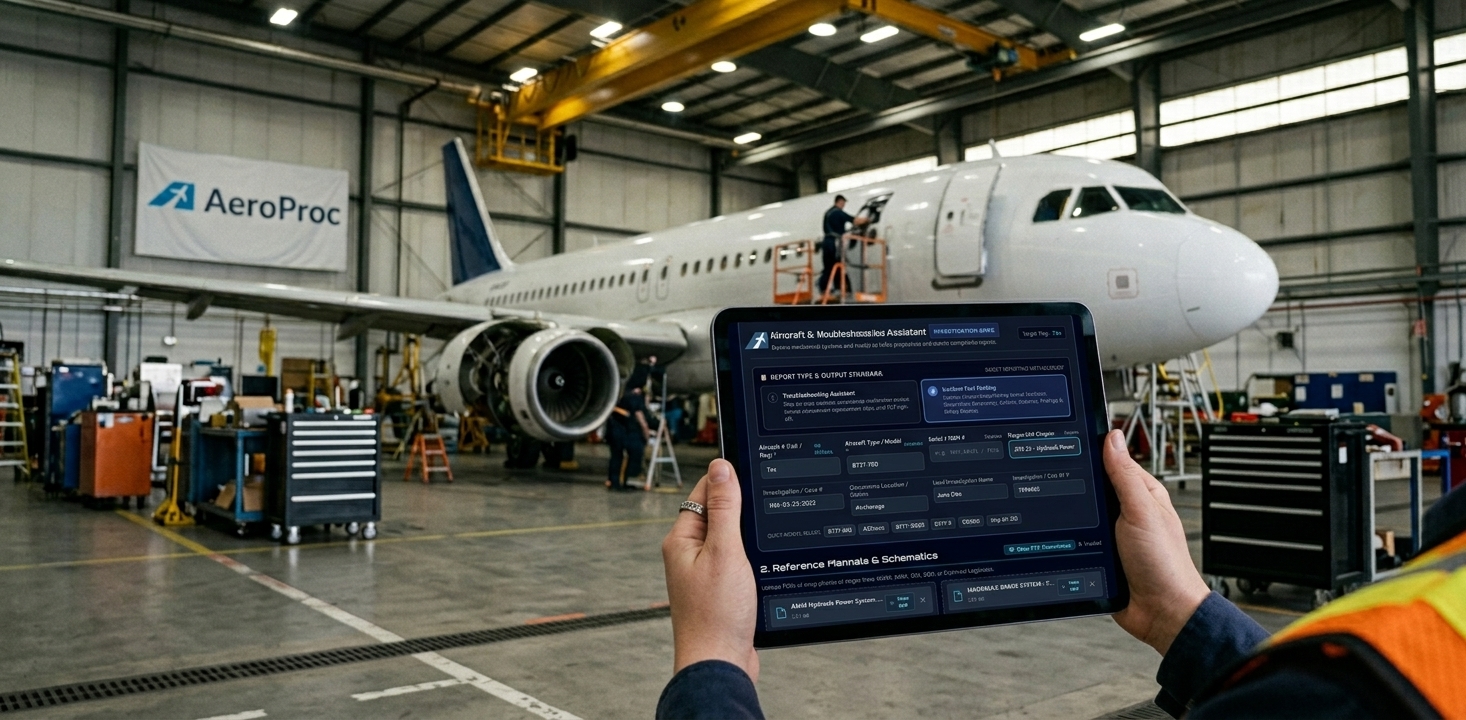
Turn a reported fault into a clearer path forward.
Bring aircraft details, technical manuals and maintenance history into one workflow. ATA helps your team connect the evidence, prepare a troubleshooting guide and organize the record for technical review.
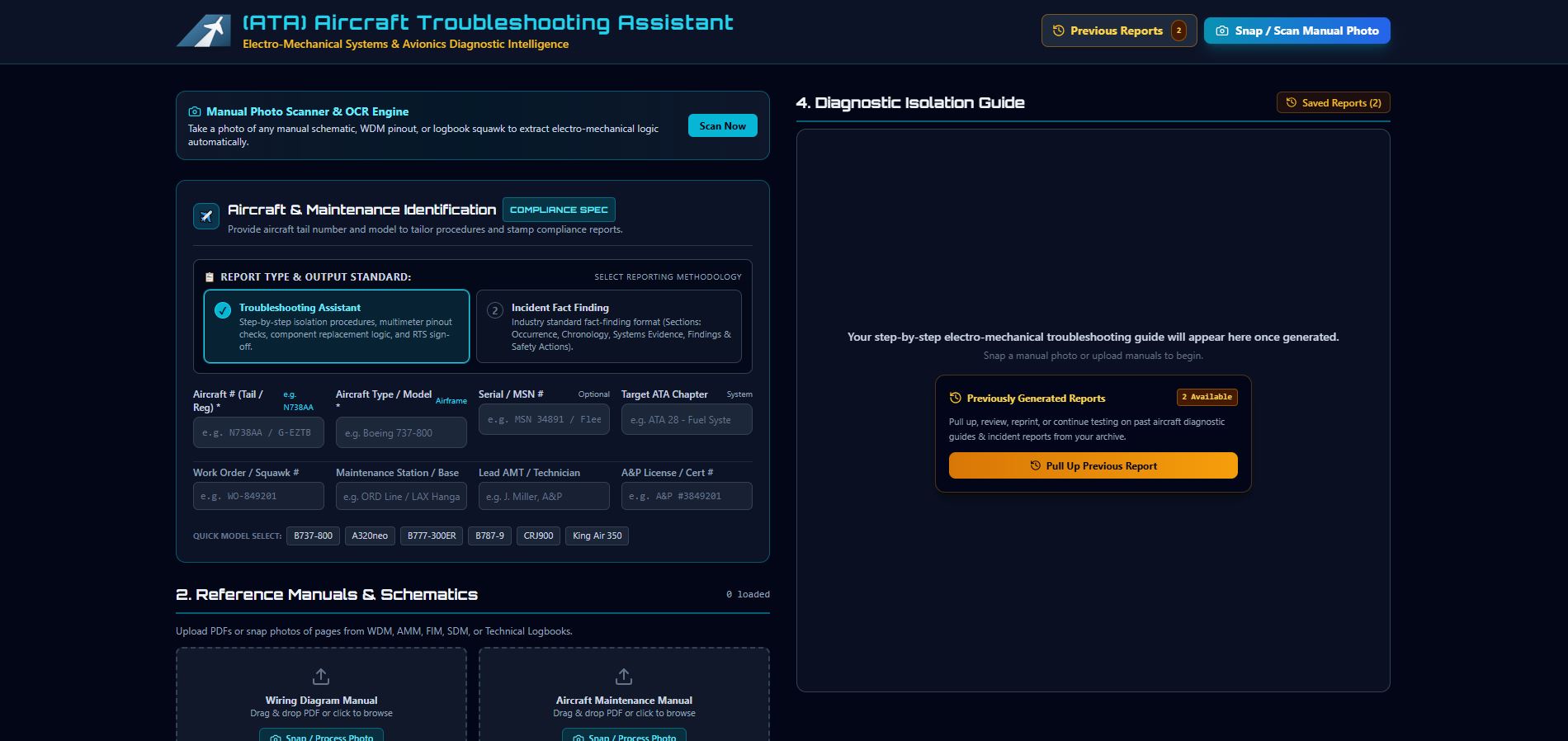
From the first discrepancy to a structured report, follow the workflow in these supplied ATA screenshots. Select any image to view it at full size.
01 / Build the contextIdentify the aircraft and work order, then bring in manuals, schematics or photographed pages.
02 / Connect the referencesA structured discrepancy record links the reported fault to source documents and a draft isolation sequence.03 / Explain the systemVisual circuit summaries help reviewers follow component relationships alongside cited manual references.04 / Prepare the handoverBring corrective actions, recorded results and review fields together in a consistent report format.
Example application output. Generated guidance, diagrams and certification wording shown in screenshots require technical validation; they do not establish maintenance approval or authorize return to service.
Case walkthrough · Supplied report
A Boeing 757 thrust reverser discrepancy.
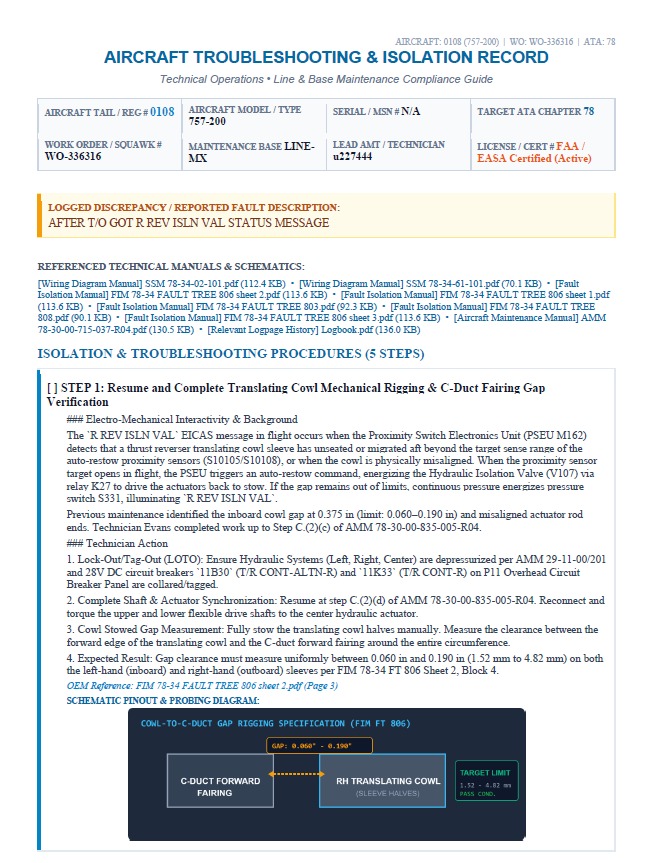
The example records an “R REV ISLN VAL” message after takeoff on a 757-200, under ATA Chapter 78.
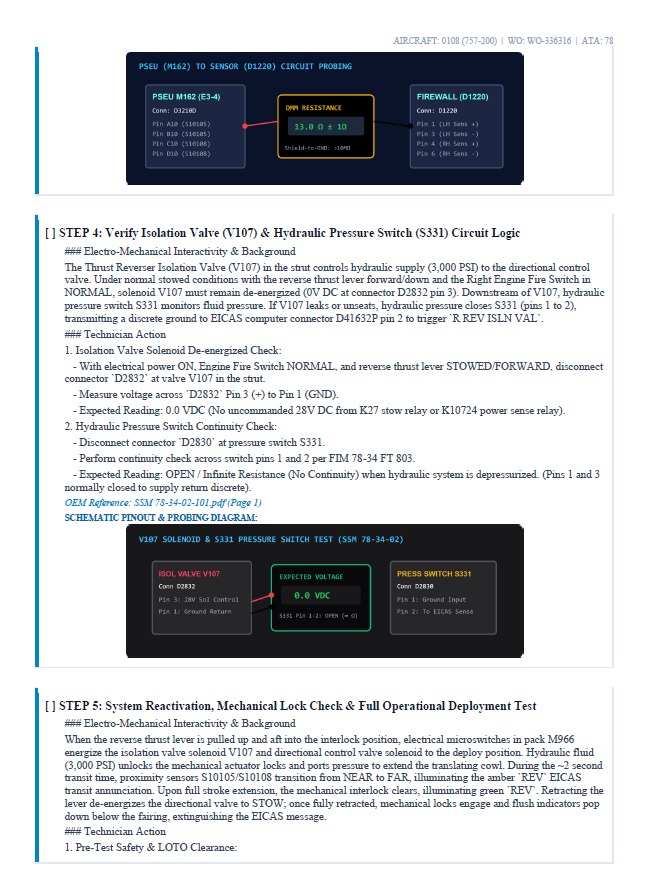
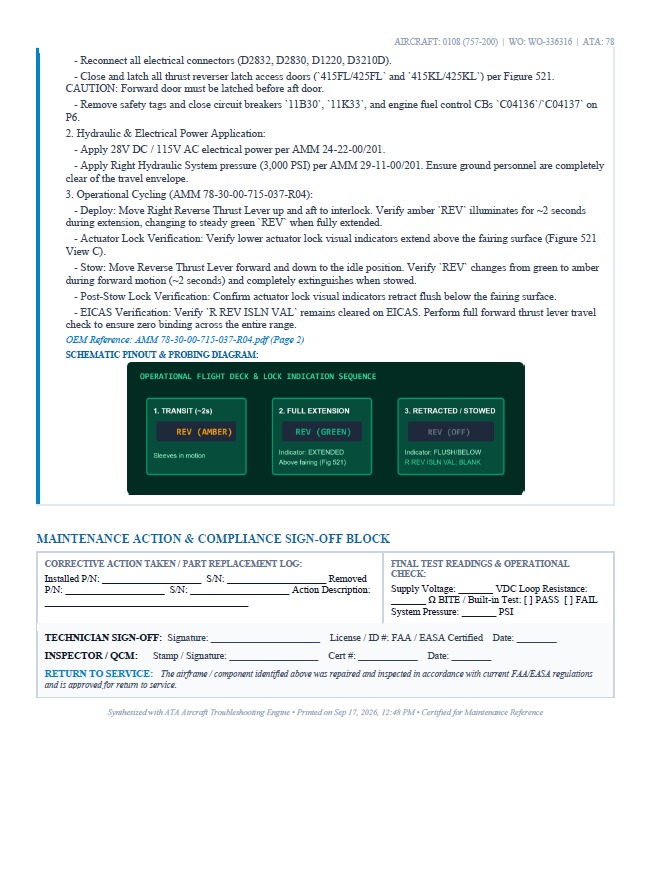
ATA brings the reported discrepancy, referenced manuals and previous maintenance context into a single draft troubleshooting record. The screenshots show mechanical context, circuit illustrations and a final recording section.
This is a walkthrough of the supplied output. The screenshots do not establish a confirmed root cause, completed repair or measured reduction in downtime.
Capture the discrepancy
Associate the reported message with the aircraft, work order and relevant system.
Bring the evidence together
Use the supplied fault isolation, maintenance and wiring references alongside the maintenance history.
Prepare a reviewable guide
Organize the proposed isolation sequence and source references so the engineering team can check applicability and accuracy.
Record what actually happened
Use the report structure to document work performed, actual findings and authorized review after maintenance.
Practical applications
Built around the people keeping aircraft moving.
Three day-to-day scenarios showing how ATA can support your organization.
01 / MRO organizations
Keep the next shift connected.
The situation: A recurring fault enters the hangar with several manual extracts and an incomplete troubleshooting history.
With ATA: Bring the squawk, aircraft details and references together. Prepare a guide with source citations and use the report structure to capture findings for the next technician and quality reviewer.
A clearer handover, with context and references in one place.
02 / Airlines
Give maintenance control a shared picture.
The situation: A line station reports a system message while maintenance control reviews the aircraft’s previous defects.
With ATA: Organize the station’s discrepancy and available manual pages into a structured technical brief. Engineering can review the proposed path and share a consistent record with the station.
Better continuity between the line team, maintenance control and engineering.
03 / Aircraft owners
Understand the maintenance conversation.
The situation: An owner needs to understand a repeated discrepancy and the evidence behind an MRO’s proposed work.
With ATA: Review a structured summary of the fault, cited documents and recorded findings with the maintenance provider. Use it to identify open questions and follow the work through to the final maintenance record.
A more informed discussion about scope, findings and outstanding work.
Incident fact-finding · Investigative reporting
See the wider picture. Act with greater confidence.
ATA Aircraft Troubleshooting Assistant™ also generates structured investigative reports from the incident or accident account and supplied evidence. Bring the sequence of events, technical context and potential contributing factors together so stakeholders can review the findings and decide what happens next.
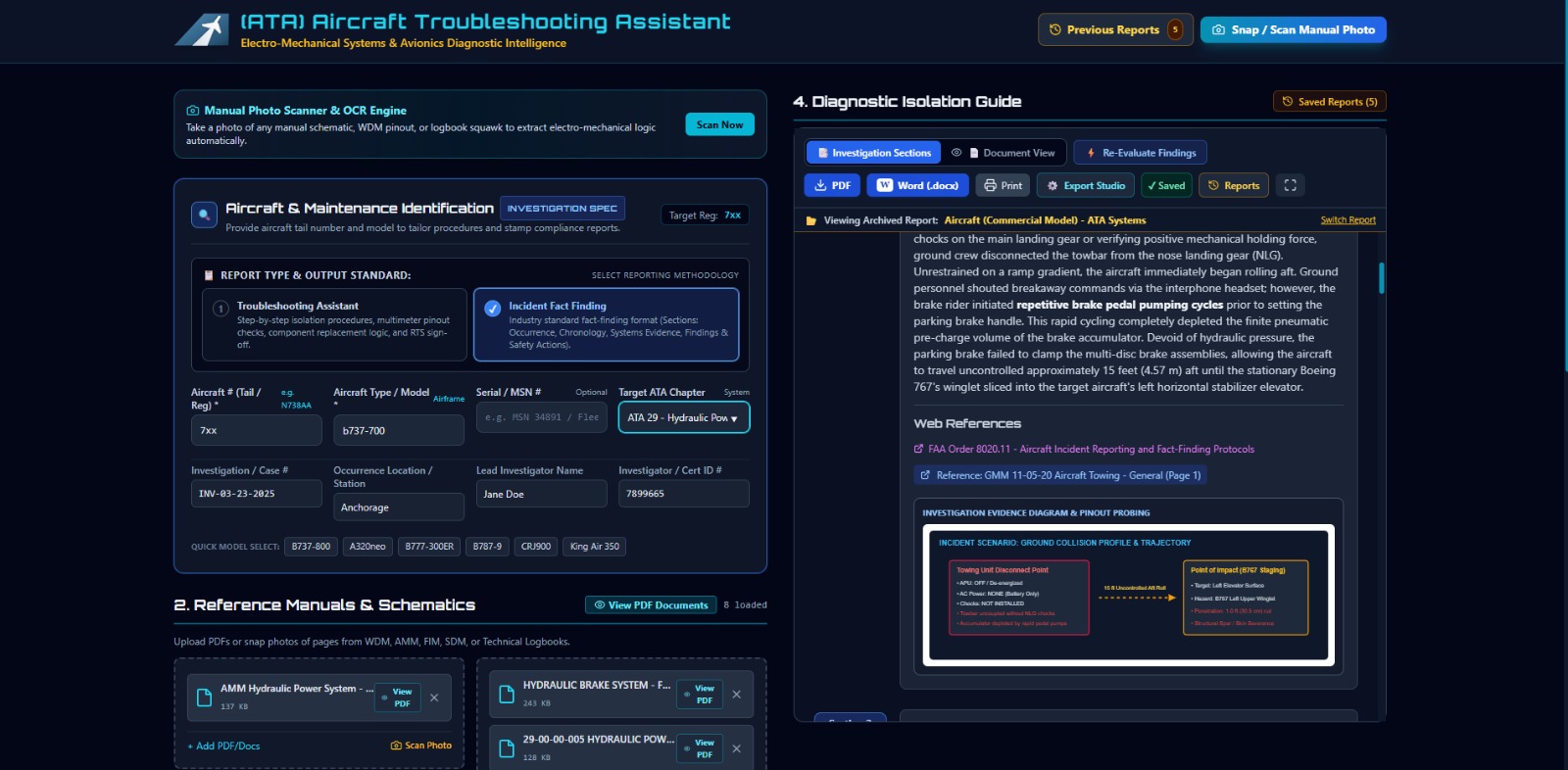
Select Incident Fact Finding, add the occurrence details and reference material, then generate a structured report for review.
Evidence into understanding
A report stakeholders can work through together.
Connect the occurrence narrative with maintenance history, physical observations and available system information. Timeline and system diagrams help explain how the reported events and technical factors relate to one another.
The interface includes section and document views, re-evaluation of findings, saved reports, and PDF, Word and print options—making the report easier to review and share.
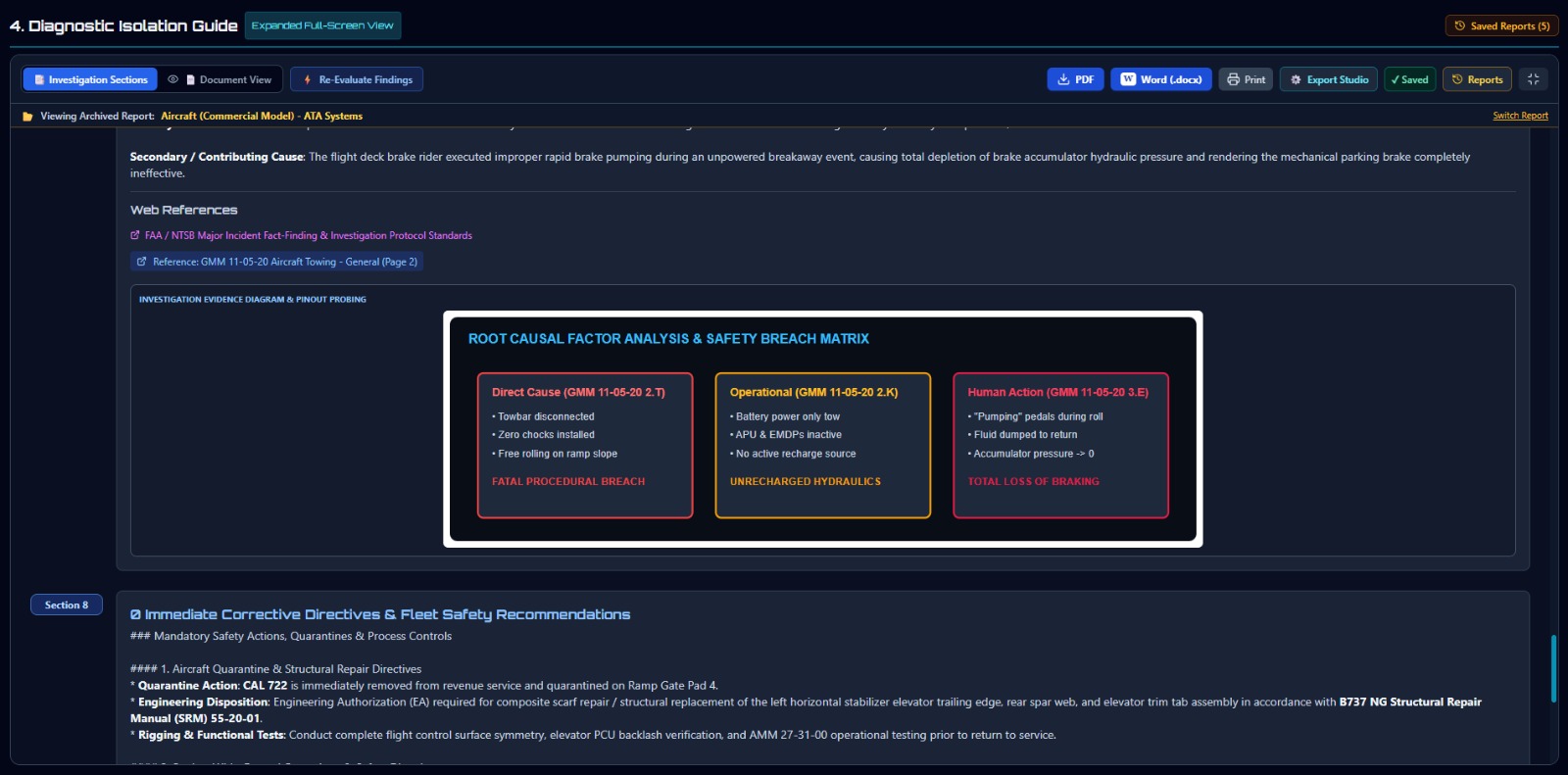
Review contributing factors, supporting references and proposed safety actions in the same workspace.
Inside the generated report
From the occurrence to an action plan.
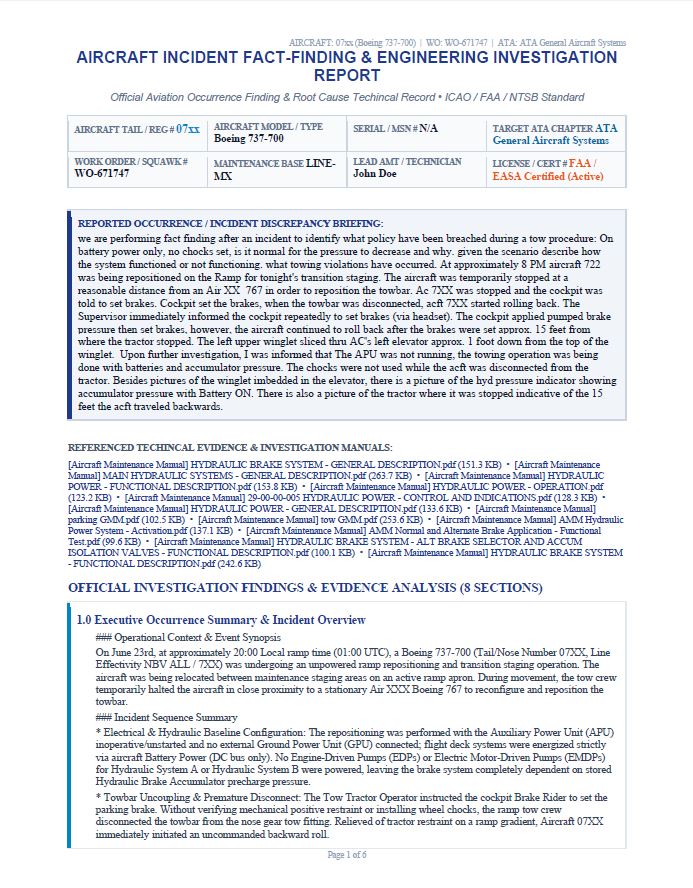
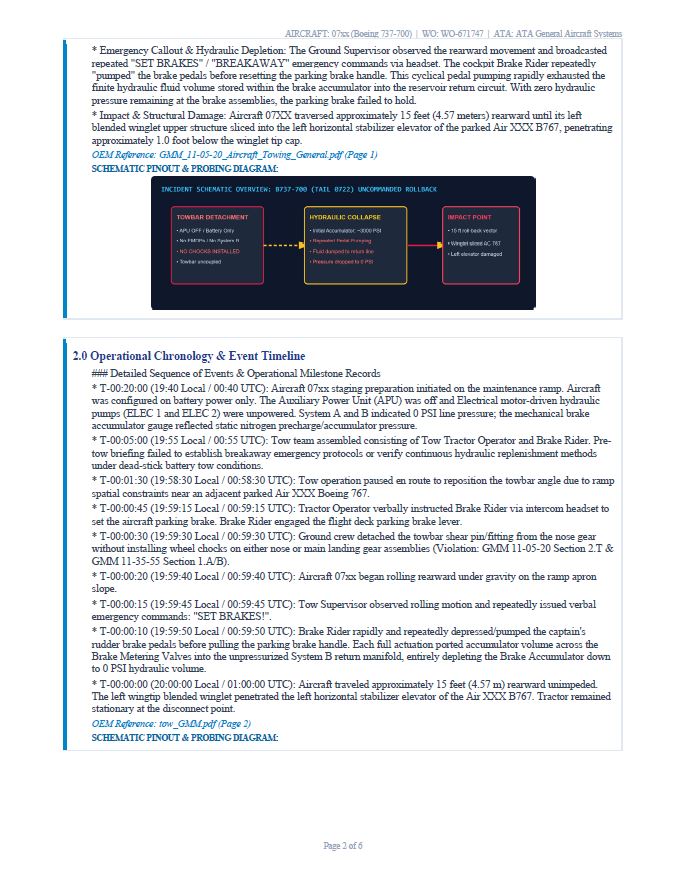
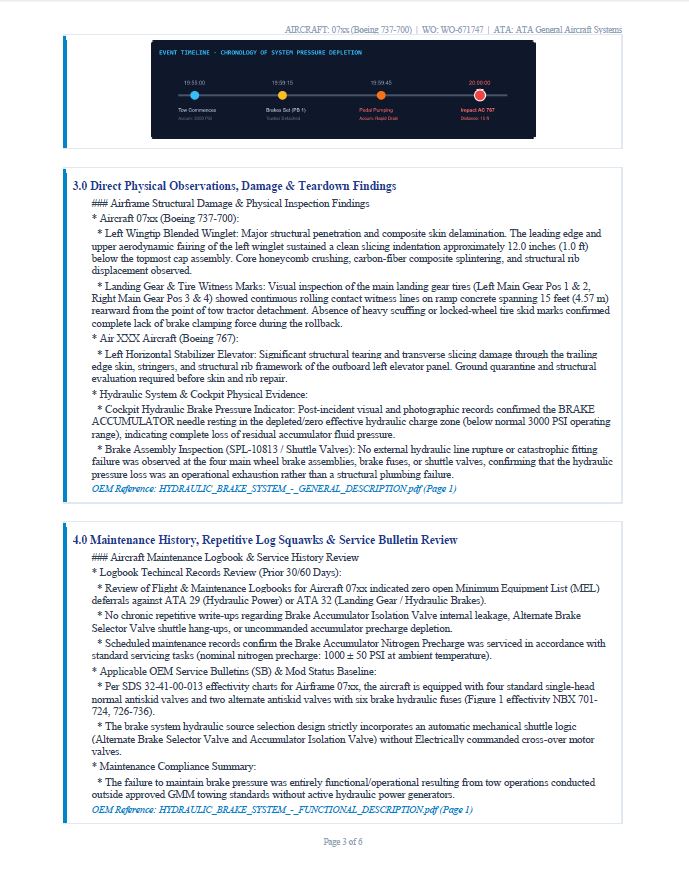
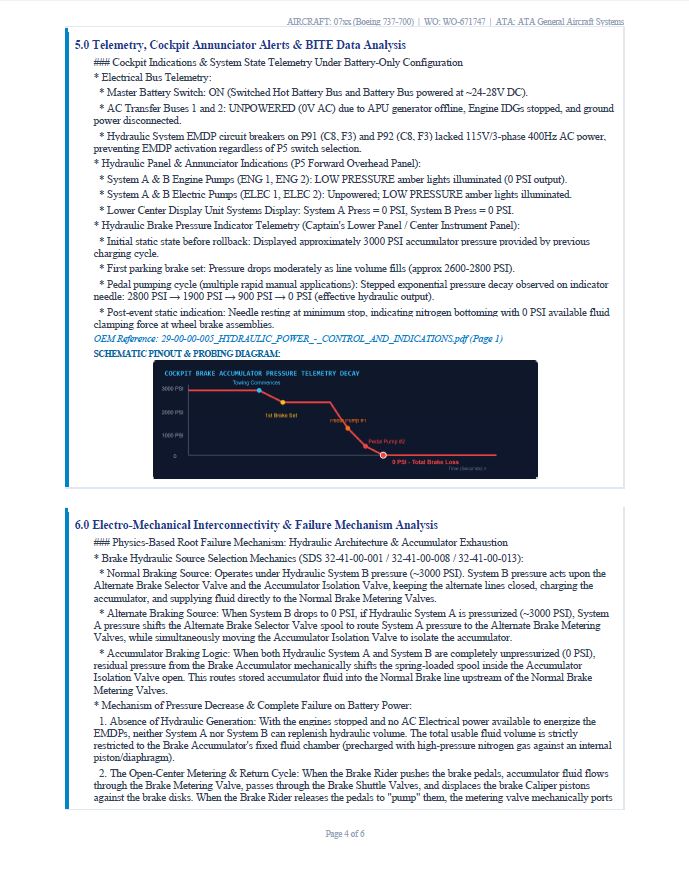
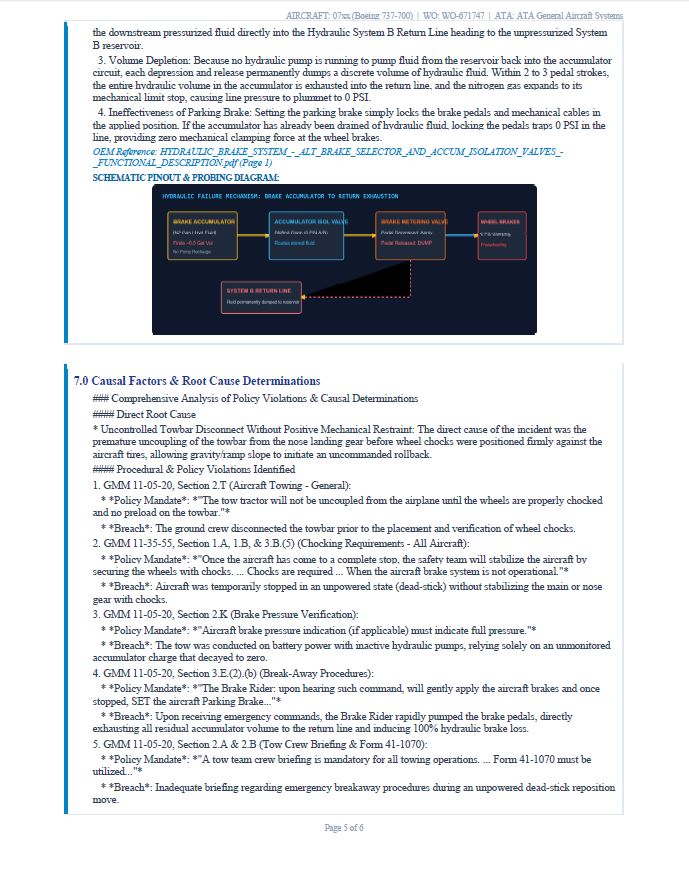
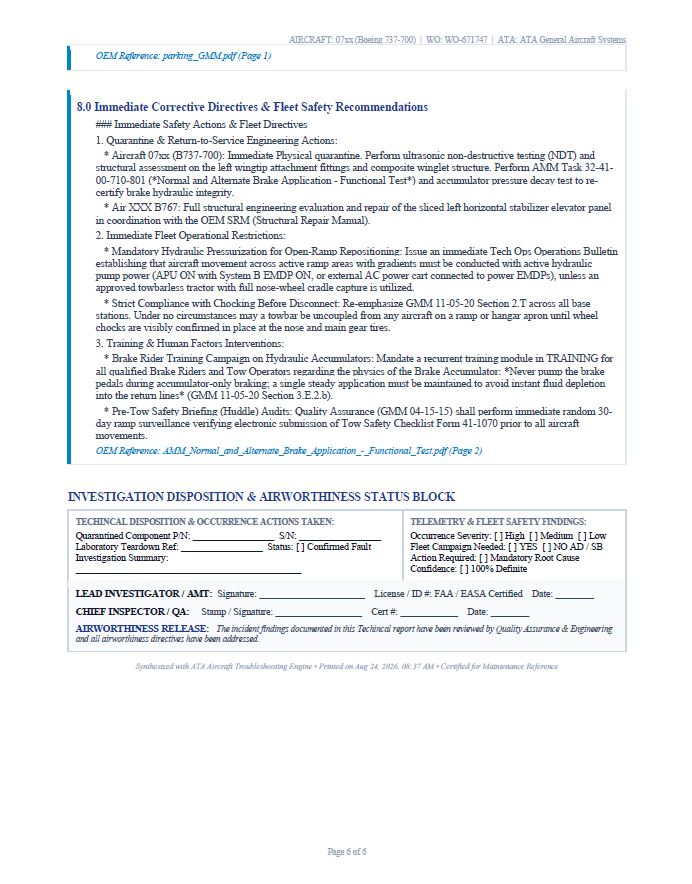
The supplied six-page example examines a reported aircraft towing and rollback incident. Select any page to inspect the original screenshot.
01 / Occurrence & overviewAircraft and case details, the reported occurrence, evidence references and executive summary.02 / Event chronologyA structured timeline connects the reported actions, system state and sequence of events.03 / Observations & historyPhysical observations, damage findings, maintenance history and service information.04 / System & mechanism analysisAvailable system data and technical relationships are organized for engineering review.05 / Potential causal factorsThe report brings together proposed contributing factors and procedural references.06 / Recommendations & dispositionProposed safety actions and a structured section for authorized review and disposition.
Illustrative software output supplied by AeroProc. Findings depend on the completeness and quality of the supplied evidence. Proposed causes and actions require qualified investigator and engineering review; generated reports do not establish regulatory approval, official accident findings or airworthiness release.
A shared basis for the next decision.
Safety & investigation teamsReview the timeline, evidence gaps and potential contributing factors before agreeing on further investigation.
Engineering & MRO teamsAssess technical findings against source records and approved data, then define the work and verification needed.
Operators, owners & leadershipUnderstand the reported event, review proposed actions and agree on responsibilities and follow-up.
From source material to technical review
Your manuals. Your aircraft. A more connected workflow.
Explore troubleshooting assistance, incident fact-finding, referenced report generation and report sharing in an ATA demonstration.
ATA supports qualified maintenance personnel. Current approved data, aircraft applicability and authorized engineering review govern all maintenance and release decisions.